.jpg)
For many companies, the website today is a business-critical part of the business. It handles not only branding and communications, but often also forms, logins, integrations and customer data. Despite this, many websites are still built on solutions where security falls largely on the responsibility of the company or agency.
Here Webflow is clearly different from traditional CMS like WordPress, Drupal and self-hosted solutions. In this article, we'll go over why Webflow is a strong choice for companies that prioritize security, and what risks and costs are often underestimated in more traditional platforms.
Security in Webflow — built from the ground up
Webflow is a SaaS-based CMS, which means that the platform is delivered as a ready-made, managed service. Security is not an option — it is an integral part of the infrastructure.
Some key elements:
• Automatic SSL (HTTPS) on all websites
• Hosting on AWS (Amazon Web Services) with global CDN
• DDoS protection, firewalls and platform-level traffic monitoring
• Isolated environments — each site runs separately
• Continuous security updates without manual application
• SOC 2 Type II, ISO 27001, GDPR compliance
For you as a customer, this means that security work is moved from project to platform. You don't have to hunt for patches, interpret security advisories, or worry about a forgotten update becoming a vulnerability.
WordPress: when security becomes a shared — and often unclear — responsibility
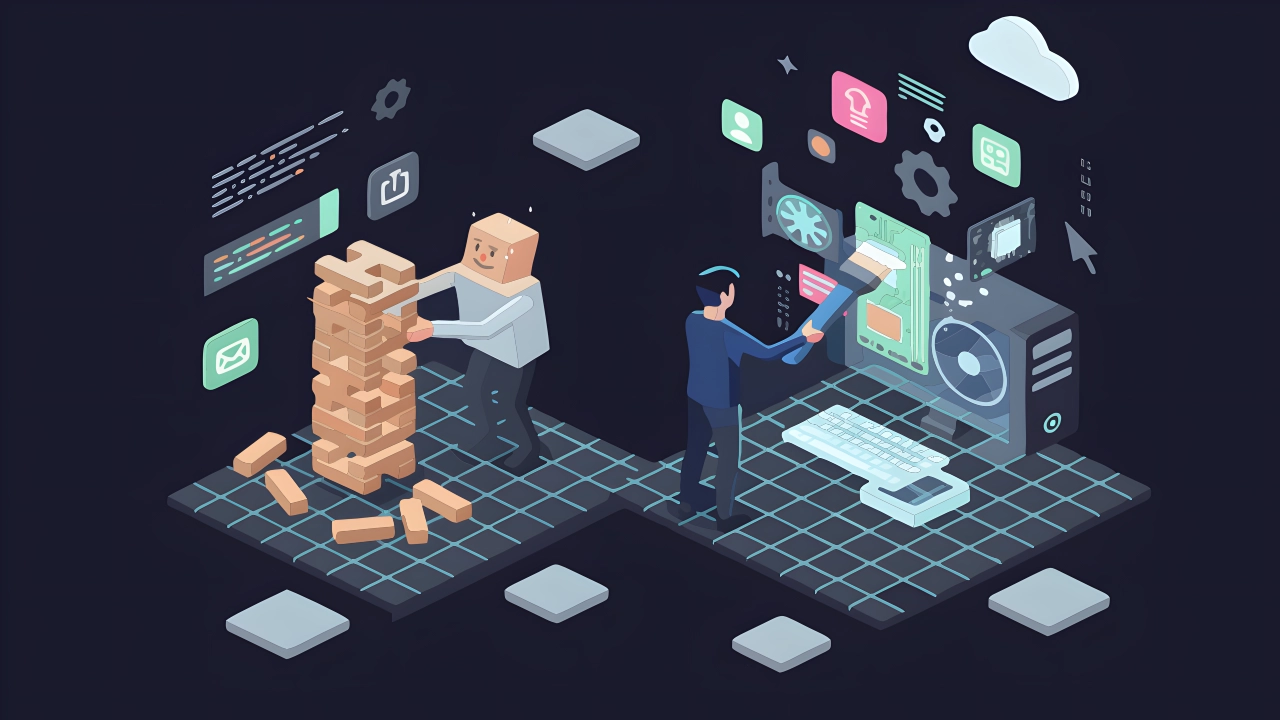
In WordPress and classic CMS solutions, security is rarely centralized. It is based instead on an interaction between the CMS core, plugins, themes, server environment and external vendors. This creates a situation where responsibility is often unclear — and the risks difficult to grasp.
• Friends
• Plugins (sometimes 10-40 per site)
• PHP Versions
• Database configuration
• Server environment
• Update routines
In practice, this means that:
• The end customer is expected to understand risks
• The agency must keep an eye on updates
• The hosting provider is responsible for the server
• Plugin developers are responsible for their code
In practice, this means that safety becomes a continuous maintenance effort rather than a stable foundation. For many organizations, this leads to deferred updates, increased costs and a higher level of risk over time. It is enough for a link in the chain to burst for the entire site to become vulnerable.
Traditional CMS hosting: technical responsibility that is rarely seen in the quotation
When companies compare CMS platforms (WordPress, Dupral, Joomla!) , the focus is often on the initial development cost and hosting. However, it is rarely where the greatest cost arises. The real economic risk is found in the ongoing maintenance and in the consequences of a lack of security. In CMS solutions where security is based on plugins, third-party templates, manual updates, and server management, the cost picture becomes difficult to predict over time.
An insecure or neglected CMS can lead to emergency response when vulnerabilities are discovered, often under time pressure. This means unplanned consultancy costs, business interruption and, in some cases, temporary website closures. For many companies, this has direct consequences for the business, for example through lost visibility in search engines, lost leads or reduced trust with customers and partners. In the event of more serious incidents, issues related to GDPR and the handling of personal data may also become relevant, which further increases both risk and cost.
With Webflow, the cost picture looks different. Because security, hosting and updates are managed at the platform level, the need for ongoing technical maintenance is reduced. This means that companies have a more predictable total cost over time and do not have to budget for recurring fire department calls.
LAPS and Webflow — security as part of the whole
At LAPS, we have chosen Webflow as our primary CMS platform precisely for these reasons. Not because it's “trendy”, but because it gives our customers:
• A safe technical foundation
• Lower long-term costs
• Less reliance on specialist skills
• A platform that scales with the business
We work daily with companies that want to leave a CMS landscape marked by uncertainty, fragmentation and unpredictable costs — and instead build something sustainable.
We are happy to help evaluate your current website, identify risks and show what a modern, secure Webflow solution can look like for your business.
Contact us — we will make a first, unconditional call.
.webp)